Brick and concrete are the core of most rubble piles. A kitchen knock-through, a removed chimney breast or a demolished garden wall can easily produce a tonne or more, and solid concrete weighs around 2.4 tonnes per cubic metre before it is broken up. That weight is what makes it hard to deal with: skips for heavy waste are small, household tips limit how much you can bring, and loading it by hand is slow and tiring work.
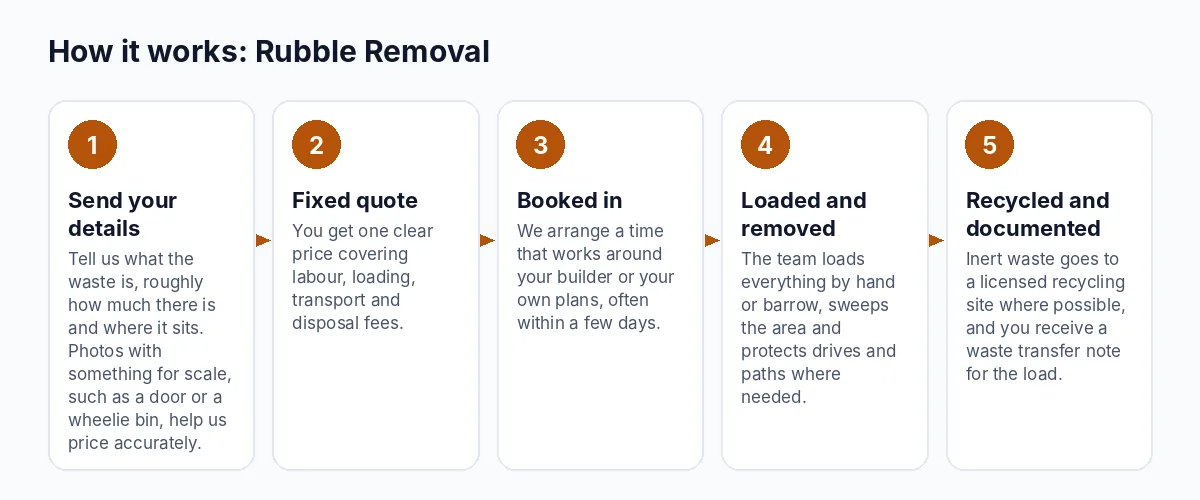
A collection takes the loading off your hands. The waste is barrowed or shovelled onto the vehicle, the area is swept, and the load goes to a licensed site where clean brick and concrete are crushed and screened into recycled aggregate for sub-bases, pipe bedding and backfill. Because clean inert waste is cheaper to dispose of than mixed waste, keeping brick and concrete separate from timber, plaster and plastic usually keeps the price down.
What is included
- Loading broken brick, blockwork, concrete and stone by hand, shovel or barrow
- Removal of old concrete bases, footings and lintels already broken into liftable pieces
- Carrying out from back gardens and side passages where the vehicle cannot reach
- Separating clean inert rubble from any mixed waste so it can be recycled
- Sweeping the area once the pile has gone
- Transport to a licensed recycling or transfer site
- A waste transfer note recording the waste type and where it went
Who it is for
- Homeowners left with rubble after a knock-through or chimney breast removal
- Builders who need the site cleared before the next trade arrives
- Garden projects that have removed old walls, steps or concrete bases
- Properties with no space or parking for a skip
- Anyone who does not want to load heavy waste themselves
How much does it cost?
As a guide, a small pile of brick and concrete of around ten to fifteen bags usually costs £80 to £180, and a one to two tonne van load £150 to £300. Larger amounts with lorry access are often cheaper per tonne on a grab lorry. See our full cost guide.