Plenty of rubble ends up somewhere a lorry cannot reach: a back garden behind a terrace, a basement dig, a loft conversion, a flat above a shop. Skips and grab lorries are no use if the waste is fifty metres and a side passage away. Hand-balling, the trade term for moving material by hand, shovel and barrow, is the only practical way to shift it.
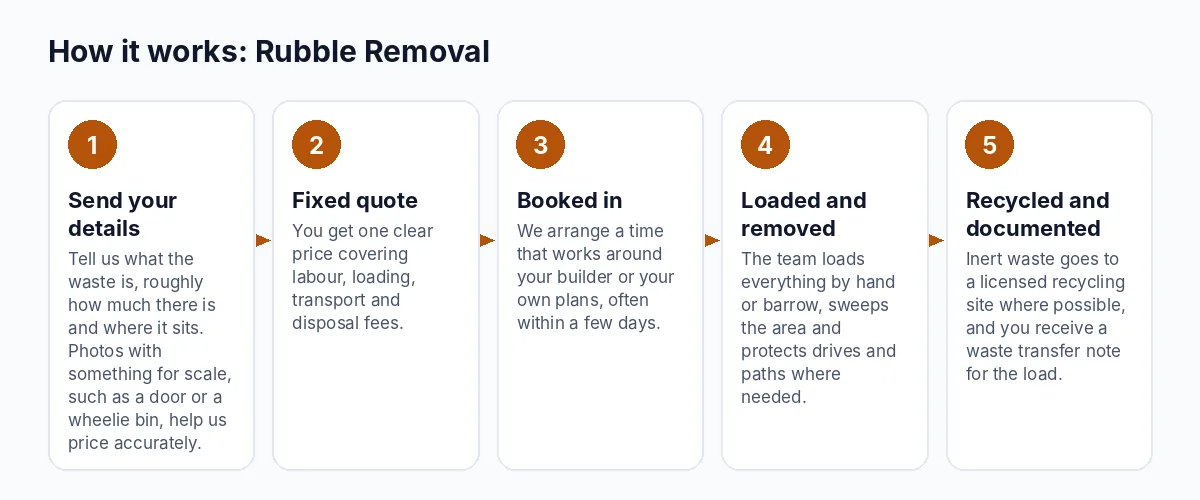
Wait-and-load means the vehicle stays on the road while the team loads it, so nothing sits on the street and no skip permit is needed. It is particularly useful in streets with tight parking, controlled parking zones or no off-road space. The price depends mainly on the carry distance, steps and narrow points along the route, so clear information about access is what makes an accurate quote possible.
What is included
- Barrowing rubble, soil and building waste from back gardens to the road
- Carrying bagged waste down stairs from upper floors and lofts
- Removing spoil from basements and enclosed courtyards
- Working through side passages, alleys and, where agreed, through the house
- Floor and doorway protection where waste passes through the property
- Loading straight onto a vehicle waiting on the road
- Sweeping the route and the pavement once finished
- A waste transfer note for the load
Who it is for
- Terraced houses with rubble in the back garden and no rear access
- Flats and upper floors where waste has to come down stairs
- Basement and lower ground floor excavations
- Streets with controlled parking or no room for a skip
- Sites where a grab lorry or crane cannot reach the pile
How much does it cost?
As a guide, a typical hand-ball job of one to two tonnes usually costs £150 to £400. Long carries, stairs and waste brought through the house add time, so they add to the price. See our full cost guide.